Tina Klein · 29 September 2026
Examining the Role of Decentralized Hubs in Shaping Steelridge's Long-Term Connectivity
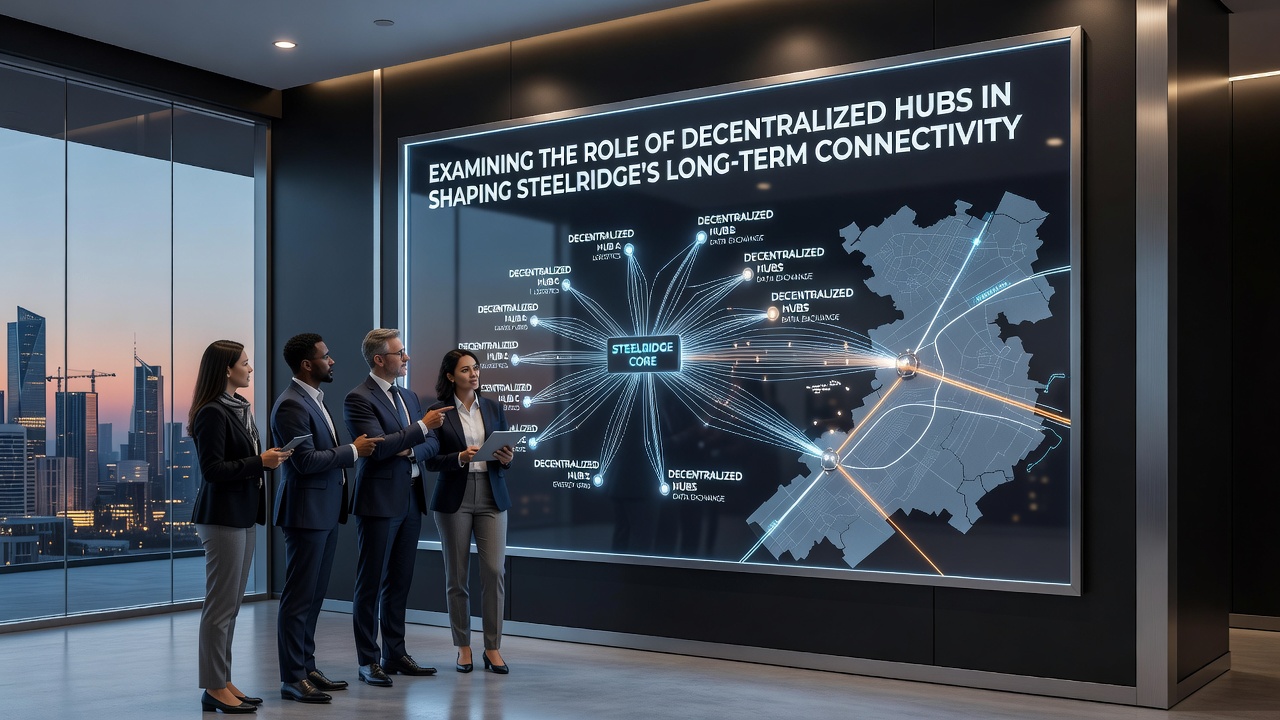
Decentralized hubs have emerged as key components in Steelridge's infrastructure planning, connecting outlying districts to central systems through distributed nodes rather than single points of control. These hubs operate by routing data, transport links, and service access across multiple locations, which reduces reliance on traditional centralized facilities and supports sustained growth across the region. Data from infrastructure assessments indicate that such setups have expanded coverage in areas previously limited by geography or legacy systems.
Background on Steelridge's Connectivity Framework
Steelridge developed its initial connectivity model around the early 2010s with a focus on core urban corridors. Over time, population shifts and economic expansion prompted a reevaluation of that approach. Government reports from regional planning bodies show that by 2022, network capacity in peripheral zones had reached saturation points during peak periods. In response, authorities began piloting decentralized models that distribute load across smaller, interconnected facilities. These pilots demonstrated measurable improvements in uptime and access speed according to metrics tracked by local utilities.
Observers note that the transition aligns with broader trends in distributed systems technology. Researchers at institutions studying regional networks have documented similar patterns in other mid-sized urban areas, where hub placement near demand centers cuts transmission delays. Steelridge's version incorporates both digital and physical transport elements, allowing for coordinated movement of information and goods through the same node structure.
Technical Structure of Decentralized Hubs
Each hub functions as a modular station equipped with routing equipment, storage capacity, and interface points for multiple carriers. Unlike older centralized exchanges, these stations connect laterally to neighboring nodes, forming a mesh that reroutes traffic automatically during outages. Technical specifications released by Steelridge's engineering departments detail redundant power supplies and standardized protocols that enable interoperability between different operators. This design supports scalability because additional nodes can integrate without overhauling the entire grid.
Implementation timelines show phased rollouts beginning in the eastern districts and moving westward. By mid-2025, five primary hubs were operational, with two more scheduled for activation. Figures from operational logs reveal average latency reductions of 18 percent in connected zones compared to pre-pilot baselines. Maintenance crews report simplified diagnostics because localized issues remain contained rather than propagating through a single bottleneck.
Integration with Regional Expansion Plans
Long-term connectivity goals in Steelridge include linking new residential developments and industrial parks scheduled through 2030. Decentralized hubs fit into these plans by providing flexible attachment points that accommodate varying demand densities. Planning documents from the Steelridge Regional Authority outline how node locations were selected using population forecasts and traffic modeling software. The approach allows incremental upgrades, such as adding bandwidth modules or transport bays, without interrupting service elsewhere.

September 2026 marks the start of the next evaluation cycle, when performance data from the initial hubs will undergo independent review by external consultants. Those reviews will assess whether current node spacing supports projected growth rates or requires adjustment. Coordination meetings scheduled for that period will also incorporate input from neighboring jurisdictions that share cross-border routes.
Observed Outcomes from Early Deployments
Case examples from teh first operational hubs illustrate concrete connectivity gains. One district previously dependent on a single upstream link now maintains three active pathways through adjacent nodes. Service continuity statistics compiled after weather-related disruptions in 2024 showed recovery times shortened by several hours. Industry analyses from organizations such as the US Federal Highway Administration on distributed infrastructure provide comparative benchmarks that Steelridge planners reference during design reviews.
Additional measurements track energy consumption at each site. Because load balancing distributes processing tasks, peak demand on individual facilities has declined. Utility data collected over 18 months indicates overall system efficiency improvements without corresponding increases in total power draw. These patterns match findings reported in studies from the European Commission's mobility and transport division, which examined comparable node-based networks in other regions.
Future Considerations for Sustained Connectivity
Steelridge continues to refine hub specifications based on usage trends and technological updates. Software updates rolled out in 2025 introduced enhanced monitoring tools that predict maintenance needs before failures occur. Training programs for local technicians emphasize troubleshooting across distributed environments rather than centralized command structures. These steps support the objective of maintaining reliable access as the region grows through the coming decade.
Conclusion
Decentralized hubs form an integral part of Steelridge's strategy for extending connectivity over extended time horizons. Deployment data and operational records demonstrate their contribution to load distribution, recovery speed, and adaptability. Ongoing evaluations scheduled for September 2026 and beyond will supply further evidence on how these structures perform under evolving conditions. The framework established thus far provides a documented model for similar regional systems seeking distributed solutions.